
You have 0 items in your cart
A recent Mercer reports states that employee thriving has plunged from 66% to 44%. WebMD Health Services 2026 Workplace and Employee Survey reported that high wellbeing fell from 43.4% (2024) to 38.8% (2026).
Organisations spend billions every year seeking to become more effective. They commission consultants, develop leaders, redesign structures, launch culture programmes and invest in employee wellbeing. Yet the experience of the people working within them appears to be deteriorating.
Do we need a Re-think?
Mercer’s Global Talent Trends 2026 report offers a troubling indicator. Only 44% of employees surveyed reported thriving at work, down from 66% in 2024 and below the level recorded during the pandemic. Its employee sample comprised 9,250 respondents. Meanwhile, Source Global Research forecast global spending on HR, change and people-strategy consulting at US$14.6 billion for 2025. This category extends beyond culture development, but it gives some indication of the resources committed to improving how organisations function.
These figures do not establish that consulting interventions have failed. They do, however, raise a serious question: if we are investing so much in organisational effectiveness while losing people in the process, is something fundamental missing from our approach?
From a Care & Growth perspective, the elephant in the room is intent.
An organisation can improve its systems without changing the intent governing its relationships. It can introduce wellbeing programmes while demanding unsustainable workloads. It can teach empowerment while retaining tight control. It can encourage honest feedback while making it dangerous to challenge those in authority. These contradictions arise when the organisation’s underlying question remains:
“How do we get more from our people?”
Within that frame, even care becomes instrumental. We care because healthier, happier employees are more productive. We develop people because greater capability delivers better returns. The employee remains a resource whose wellbeing matters insofar as it serves organisational objectives. There is a profound difference between caring for someone because they matter and caring for them because care makes them more useful.
The distinction becomes visible when care carries a cost, when development requires relinquishing control, or when supporting someone’s growth creates inconvenience. These moments reveal the intent behind the relationship more clearly than any values statement.
Better remuneration, useful training and improved systems can undoubtedly benefit people. Those benefits matter. But they do not necessarily resolve the underlying problem. If the relationship remains governed by an intent to take, the organisation continues to reproduce the conditions that deplete its people. Treating symptoms can provide relief while leaving the disease untouched. In that sense, the prognosis remains terminal: a system that persistently consumes the human capacity on which it depends undermines its own future.
This also helps explain why culture initiatives can encounter diminishing returns. When people repeatedly hear promises of care but experience demands for greater output, they learn to distrust the promises. Each successive programme risks becoming further evidence that management has found another way to ask for more. Cynicism is then an intelligible response to the gap between what the organisation says and what its decisions reveal.
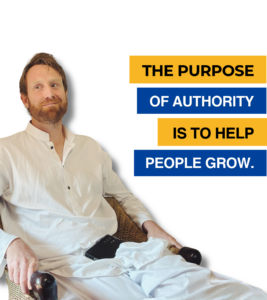
A radical rethink must therefore begin with the purpose of authority.
Care & Growth asks leaders to assume responsibility for the people entrusted to them: to provide the means they need, cultivate their ability, entrust them with increasing responsibility and hold them accountable in ways that support their growth. This requires discipline and demanding standards. It also requires a shift in intent – from securing people’s contribution for our own ends towards enabling them to contribute and grow. Culture initiatives become credible when everyday leadership decisions express that commitment. Without it, we risk spending ever more money repairing the consequences of a philosophy we refuse to examine.
If organisational life is leaving people depleted, we should not be surprised. We should examine what our systems are designed to obtain – and what those who exercise authority understand themselves to owe.


LET’S CONNECT
Want to learn more about leadership and how to build your team with greater purpose, strengthen organisational culture, and unlock potential?
WE ALSO OFFER