
You have 0 items in your cart
In business, leadership is often measured by what is easy to see. Revenue.
Growth.
Market share.
Successful projects.
Targets achieved.
These things matter. Leaders have a responsibility to deliver results. But when a leader eventually moves on, something interesting happens. People rarely remember the numbers first. They remember how you made them feel. They remember the confidence you helped them discover. The opportunity you gave them when someone else might have overlooked them. The difficult conversation that challenged them to grow. The moment you believed in them when they were unsure of themselves. Because leadership is not only about what we accomplish. It is also about who becomes stronger because we were there.
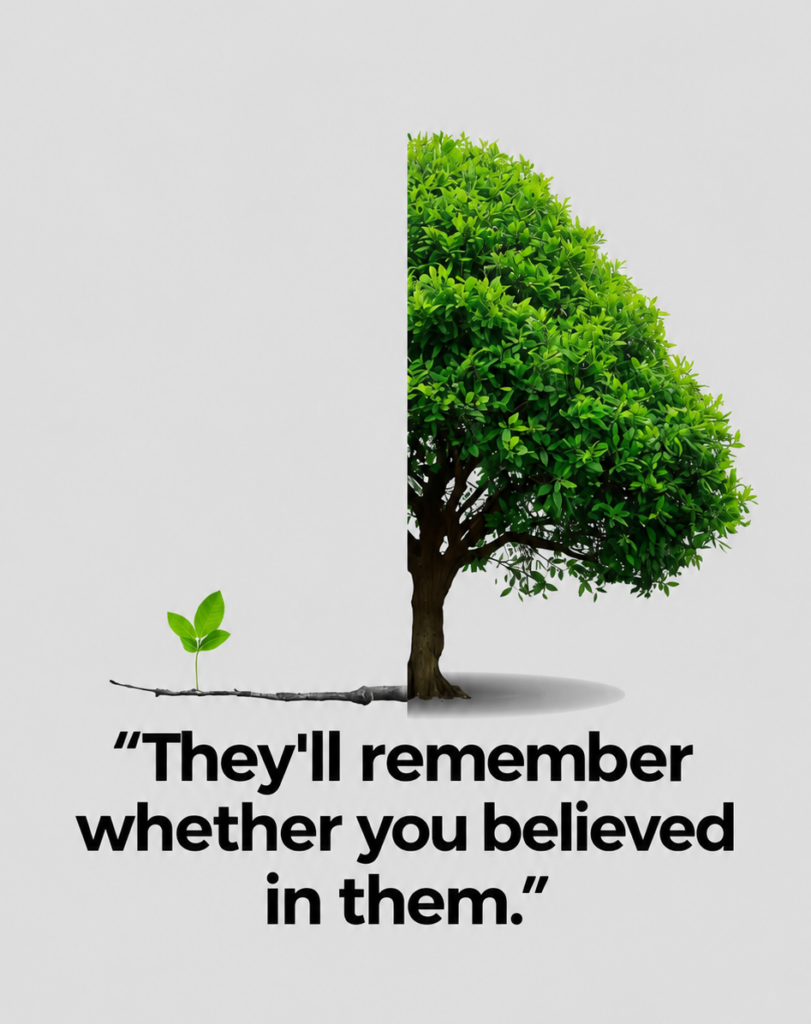 Every Interaction Leaves Something Behind. Legacy does not begin with a grand achievement. It is built in ordinary moments. A rushed conversation can leave someone feeling invisible. A dismissive response can silence an idea. A lack of trust can make someone afraid to take responsibility. But a thoughtful question can unlock possibility. A sincere word of appreciation can restore confidence. A difficult conversation, handled with care, can change someone’s direction. We often underestimate the impact we have in these small moments. People don’t only listen to what we say. They experience our intent. They remember whether they felt respected. Whether they were challenged. Whether they were supported. Whether someone genuinely believed they were capable of more. Every interaction leaves something behind. The question is: what are we leaving behind in people?
Leadership Is About More Than Getting Results. Leadership is often defined by what needs to be achieved today. But great leadership also asks what needs to be built for tomorrow.
A project can deliver a result. A challenge can develop resilience. A difficult conversation can build maturity. A success can become an opportunity to empower someone else.
The strongest leaders understand that their role is not simply to solve problems.
It is to develop people who can solve problems without them. That means resisting the temptation to always have the answer. Instead of asking, “How can I fix this?” we can ask: “How can I help this person learn to handle it?” Instead of creating dependence, we create capability. Instead of building followers, we develop future leaders. And while developing people may take more patience than doing everything ourselves, the impact lasts far longer.
Want to learn more about leadership and how to lead your team with greater purpose, strengthen organisational culture, and unlock potential? See: www.schuitemagroup.com
We also offer:
# Executive Coaching
# Diagnostics
# Organisational Culture Transformation
# Leadership Development Programmes